HVAC System Cost Duluth: What Does a New System Actually Cost?
Any HVAC system cost Duluth homeowners find quoted online is a national average, and national averages are built from houses that never have to hold 70 degrees against 20 below. There is no single price for a new system, because the number for your house is set by a short list of specific things about your house.
What you can get right now is that list. Below are the six factors that actually move the price, plus the exact contents a written estimate needs before it is worth comparing to anything.
Judge every quote you receive against those two things. It works better than a range nobody can source.
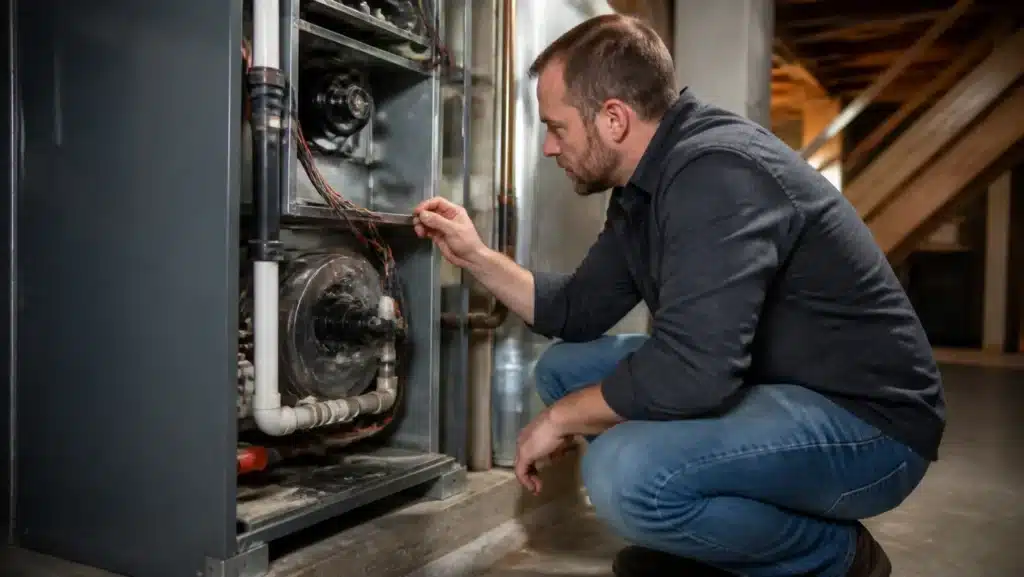
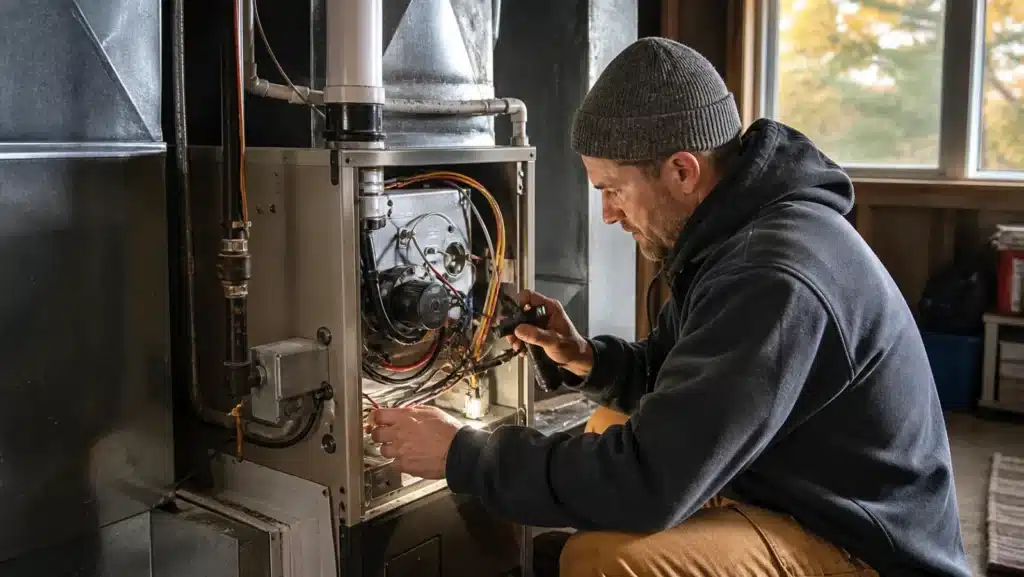
[IMAGE: New high efficiency furnace and air handler installed in a Duluth basement mechanical room]
Why There Is No Single Price for a Northland Home
Equipment is sized to a home’s heat loss and heat gain. Heat loss depends on square footage, insulation, window area, air sealing, and the design temperature the system has to hold against. Two houses on the same block, built ten years apart, can genuinely need different equipment.
That last item is where the Northland breaks the calculators. Our winter design temperature in the Twin Ports sits far below what national cost tools assume, which changes both the capacity a system needs and which equipment is a sensible choice here at all.
That is why an online average is worse than useless when you are buying. It anchors you to the wrong house, and then it makes an honest local quote look expensive by comparison.
The measurement that replaces the guess is a load calculation. It is a room by room accounting of how much heat your house loses and gains, and no legitimate quote for a full system gets written without one.
Want a number that is about your house instead of an average one? Call Advantage Air Plumbing, Heating and Cooling at 715-817-4404.
The Questions Homeowners Ask About HVAC System Cost
What actually drives the price?
Six things. The heating and cooling capacity your load calculation calls for. The efficiency tier and stage count of the equipment you choose. The condition of your existing ductwork. The venting and electrical work the new equipment requires. Permits and inspection. And removal and disposal of the old system.
Ductwork is the one nobody anticipates. Undersized or leaky duct in an older Duluth or Superior home can cap what a high efficiency system will ever deliver, and correcting it is real work with real cost attached.
Labor and access matter too. A hillside Duluth basement with a tight stairway and a ninety degree turn is a different install from a walkout, and the estimate should say so.
Do I have to replace the furnace and the air conditioner at the same time?
Not always, and anyone who insists it is always required is selling.
Here is the real reason it often gets recommended. The indoor coil and the outdoor unit are matched and tested as a system, so pairing a new air conditioning unit with an old indoor coil can cost you the rated efficiency you just paid for.
If one unit has plenty of life left and the components genuinely match, replacing just one is legitimate. Ask which case you are in, and why.
Doing both at once usually means one round of labor, permits, and startup instead of two. That is a cost point, not a pressure tactic, and you are allowed to treat it as one.
[IMAGE: Technician measuring window area and taking room dimensions for a load calculation]
Will a bigger system heat better?
No, and this is the most expensive myth in the whole conversation.
An oversized furnace satisfies the thermostat fast and shuts off, then restarts a few minutes later. That short cycling wears components, leaves uneven temperatures between rooms, and on the cooling side it never runs long enough to pull humidity out of the air.
Correct sizing is the entire point of the load calculation. Oversizing is a cost you pay twice, once on the invoice and again every day you live with it.
What should a written estimate include?
The load calculation for your house. Exact model numbers for every piece of equipment. Parts and labor broken out. Any ductwork, electrical, or venting work called out separately. Who pulls the permit. Removal and disposal of the old system. Startup and commissioning. And the warranty terms on both the equipment and the labor.
You get a clear written estimate covering parts and labor before we touch anything, and there are no hidden fees on it.
If a quote comes back as a single number on one line, ask for the breakdown. A contractor who will not itemize is asking you to trust a number you have no way to check.
Is financing available?
Yes, financing is available on qualifying systems.
Ask what the current terms are when you call. Rates and terms change, and which ones apply to you depends on the equipment you choose, so you should hear what is available at the time you are buying rather than what was available last year.
What about rebates and tax credits?
Federal tax credits exist for qualifying high efficiency equipment, and utility rebates exist in this service area. Both the dollar amounts and the qualifying equipment lists change from year to year, so any figure printed in an article is out of date the moment a program updates.
Ask for the qualifying equipment list and the current rebate figures in writing at quote time. That way the incentive is priced into your decision instead of hoped for afterward.
[IMAGE: Outdoor condenser on a raised pad beside a Superior WI home in late summer]
Call Us for a Number That Fits Your House
Get the two things this post told you to demand: a load calculation for your specific home, and an itemized written estimate you can actually read. Call Advantage Air Plumbing, Heating and Cooling at 715-817-4404 to start.
August is the window where a replacement gets planned and scheduled instead of decided at 6 AM on the first cold night. That is a real reason to start now, and it does not need an offer behind it.
We are family owned and operated since 2014, and we install HVAC systems in Duluth, Superior, Hermantown, Proctor, Cloquet, and the surrounding Northland. Our technicians are NATE Certified and EPA 608 Certified, every estimate covers parts and labor, and we will tell you honestly when a repair beats a replacement.
Frequently Asked Questions
Q: How long does a new HVAC system installation take?
A: Usually one day for a straightforward furnace and air conditioner changeout. It runs longer when ductwork, venting, or electrical work is part of the job, and we tell you which one yours is before we start.
Q: How long should a furnace last in this climate?
A: It depends more on maintenance than on the badge. A furnace that gets annual service and clean filters lasts meaningfully longer than one that does not, and Northland furnaces log a lot of runtime either way. We will give you a straight read on where yours sits.
Q: Do you handle the permit?
A: Yes. We pull the permit for installation work and coordinate the inspection, and it shows up as a line on your estimate rather than as a surprise later.