Why August? Because October Is Too Late
It seems counterintuitive to think about your furnace when it’s 85°F outside. But August scheduling is one of the most practical things a Minnesota homeowner can do for their HVAC system. By October — when the first cold snaps arrive and everyone suddenly realizes they haven’t tested their heat yet — HVAC companies are booked out weeks in advance for furnace tune-ups and repairs.
Scheduling your fall furnace maintenance in August gets you the same service at a convenient time and your choice of appointment slot. If the inspection uncovers a problem that needs parts ordered or a repair that takes a few days to schedule, you have time to get it handled before you actually need heat. Waiting until the first cold night and finding out your furnace isn’t working is a far worse version of the same situation.
What a Fall Furnace Tune-Up Covers
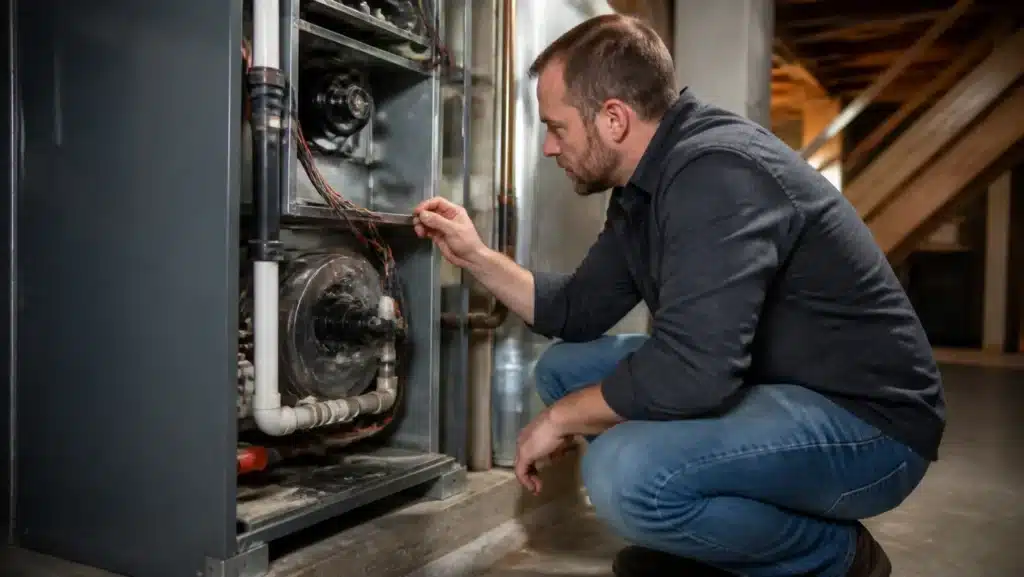
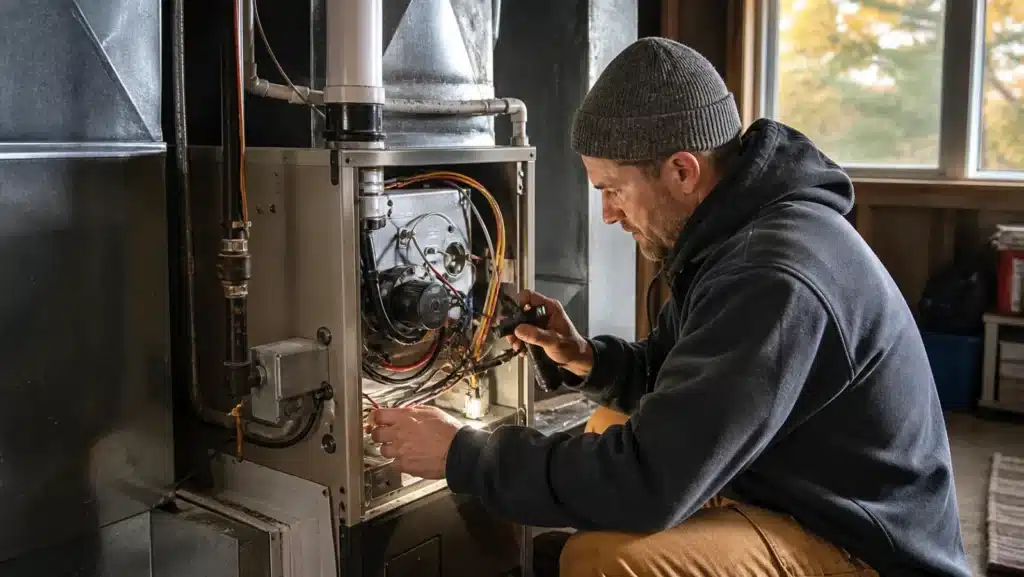
A proper furnace tune-up from a licensed HVAC technician is more than a visual check. Your tech will inspect and clean the burners, test the igniter and flame sensor (two of the most common failure points on modern furnaces), inspect the heat exchanger for cracks (a critical safety check — a cracked heat exchanger can allow combustion gases including carbon monoxide to enter your home’s air supply), test safety controls and limit switches, lubricate moving parts, check the flue for proper draft and any obstructions, and verify the thermostat is communicating correctly with the system.
The tech should also measure combustion efficiency — how completely your burners are converting fuel to heat — and compare it against manufacturer specifications. A well-maintained furnace operates close to its rated efficiency; a neglected one can be significantly less efficient.
DIY Steps Before Your Tune-Up Appointment
There are a few things you can do on your own to prepare for the heating season. First, replace your air filter if you haven’t done so since spring. Fresh filter going into heating season is good practice. Second, walk through your home and make sure all supply and return vents are clear of obstructions — furniture, rugs, and stored items accumulate over summer.
Third, locate your furnace’s emergency shutoff switch (usually a red switch near the furnace that looks like a light switch) and your gas shutoff valve so you know where they are. Test your carbon monoxide detectors and replace batteries if needed. CO detector placement matters — install them at sleeping level on every floor of your home. Replace any CO detector older than 5-7 years regardless of whether it’s beeping; the sensors degrade over time.
Is Your Furnace Approaching End of Life?
If your furnace is 15-20 years old, an honest evaluation from your HVAC tech during the fall tune-up is worth requesting. Ask directly: given the system’s age and condition, what’s your assessment of its remaining useful life and reliability going into winter? An honest answer might save you from a mid-January furnace failure in Minnesota — an uncomfortable and expensive situation.
Modern high-efficiency furnaces (96%+ AFUE) offer meaningful energy savings compared to older 80% AFUE units. Depending on your current equipment’s efficiency and your heating usage, the payback period on a proactive replacement before failure can be attractive — and you get to choose the timing and the equipment rather than making a rushed decision in the middle of a cold snap.
Related Services
Book Your Fall Tune-Up Now
Don’t wait until the fall rush. Advantage Air Plumbing, Heating & Cooling is booking fall furnace tune-ups now. Schedule yours in August and head into Minnesota’s heating season with confidence. Contact us today to get on the calendar.